Remember the last time you woke up with a scratchy throat, a weird rash, or a headache that just wouldn’t quit? Chances are, the first thing you did wasn’t call your doctor. You opened Google.
You’re not alone. Studies suggest that over 7% of Google’s daily searches are health-related, which is roughly 1 billion health queries every single day. Before a patient ever walks into a clinic, sits in a waiting room, or picks up a prescription, they’ve already had a long conversation with a search bar. This shift is quiet but seismic, and it’s changing everything about how healthcare decisions get made and how healthcare brands need to show up.
 Patient Journey Now Starts Online
Think about how a diagnosis used to work. Symptoms appeared. You waited a few days, maybe called your GP, got an appointment two weeks out, and then finally got answers. That linear journey is largely gone.
Today’s patient is a self-researcher. They Google symptoms at 2 AM. They read Reddit threads. They watch YouTube explainers. By the time they actually speak to a doctor, many have already self-diagnosed, compared treatment options, and short-listed the brands they trust.
This means the healthcare industry has a content problem – and an opportunity problem – both at once.
If your brand isn’t showing up during these early-stage searches, you don’t exist to that patient. It’s that stark.
 What “Searching for Symptoms” Actually Looks Like
People don’t search like medical textbooks. They type things like:
- Why does my chest feel tight after eating
- Is metformin safe long-term
- Best inhaler for exercise-induced asthma
These are conversational, anxious, and deeply personal queries. And they require a very specific kind of content to answer them well, content that is medically accurate, empathetic in tone, and optimized well enough to actually surface in results.
This is exactly where a healthcare marketing agency earns its value. Because ranking for health-related keywords isn’t just about stuffing terms into a blog. Google holds health content to a higher standard through its E-E-A-T framework (Experience, Expertise, Authoritativeness, Trustworthiness). In practice, that means pages need credentialed authors, cited sources, clean UX, and a genuine focus on user intent, not just keyword density.
 Why Pharma and Medical Brands Can’t Afford to Be Invisible
Here’s the uncomfortable truth for many healthcare organizations: their competitors are already there. A patient searching for information about a cholesterol medication may find a competitor’s blog, a hospital’s explainer video, or a patient forum before they ever find your brand.
For pharmaceutical companies specifically, the stakes are even higher. A well-run pharma marketing agency understands that content in this space must balance commercial goals against strict regulatory guardrails. It’s not just about getting clicks. It’s about building trust without crossing the line into misleading claims or off-label promotion.
Similarly, clinics, med-tech companies, and health networks working with a medical marketing agency need content strategies that speak to both patients and practitioners because the search journey often involves both.
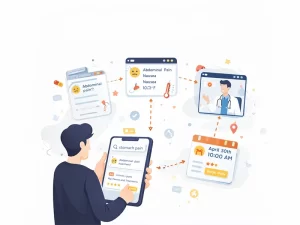 The Role of Search in Building Health Trust
There’s something worth sitting with here. When someone Googles their symptoms at midnight, they’re not just looking for information. They’re looking for reassurance. They’re scared, confused, or simply trying to make sense of what’s happening to their body.
The brands that show up with clear, compassionate, credible content in those moments don’t just rank well. They become trusted. And in healthcare, trust is the only currency that really matters.
That’s a meaningful opportunity, but it requires commitment. It means investing in long-form educational content, condition-specific landing pages, FAQ-driven blogs, and the kind of technical SEO infrastructure that ensures all of it actually gets found.
Meeting Patients Where They Already Are
Google isn’t replacing doctors. But it is the first stop on almost every patient’s health journey. The healthcare brands that understand this and build content strategies around it are the ones that will earn attention, loyalty, and ultimately, business.